
Your brand is perhaps your professional services firm’s most valuable asset. If this is true, then developing a stronger, more engaging brand is your single most important task. Think this sounds like an exaggeration? Consider what a professional services brand is and how a brand development strategy can guide you on the right path.
Your Brand Defined
A professional services brand is the product of a firm’s reputation and its visibility in the marketplace. As a result, one way to measure the strength of your brand is with the formula, Reputation X Visibility.
Any successful marketing program has to address both of these factors. Your firm’s reputation is not enough. Prospective buyers have to be able to find you. Nor is being highly visible enough. People need to value the services and products you have to sell.
That means there is another important dimension of your brand, as well: how relevant it is to your target client audience. We’ll explore this point more a bit later, but first let’s explain what we mean when we say brand development.
What is Brand Development?
Brand development is the process of creating and strengthening your professional services brand. When Hinge helps firms develop their brands, we divide the process into three phases.
- First, we make sure we get your brand strategy right and aligned with your business objectives.
- Second, we develop all the tools you will need to deliver your brand to the marketplace. This includes a range of things, such as your logo, tagline and website.
- Finally, we strengthen your new or updated brand. Think of this as a marketing program designed to boost both your reputation and your visibility.
Your brand development strategy is how you go about accomplishing these tasks. To make the task a bit easier to digest, we’ve broken the brand development strategy into 10 steps.

A Ten-Step Approach to Creating a Brand
1. Think about the entirety of your company plan
Having a strong and well differentiated brand will greatly simplify expanding your business. However, what kind of business are you seeking? Are you considering an organic approach? The foundation for your brand development strategy is your overall business plan, thus that’s where you should begin. Your brand will help you get there if you are clear about where you want to go with your business. When planning your strategy, think about both what you will be doing and what you will not be doing (and who you will not be serving).
2. Determine who your target market is
Who are your ideal customers? You are making a major error when you use the term “everybody.” Our study demonstrates unequivocally that businesses with high growth and high profit margins are focused on having well-defined target customers. A more focused approach increases the likelihood of rapid expansion. Your marketing message needs to be more diluted the more diverse your target demographic is. Therefore, how can you tell if you have selected the appropriate target customer base? The next step follows from there.You become a “specialist” when you concentrate on a specific target audience, such as an industry (or a group of related industries), a job (such as a CEO), or something else. In addition to standing out from their non-specialist peers, experts may demand higher pay.
3. Conduct research on your target audience
Businesses that conduct thorough research on their target customer base are more profitable and expand more quickly (see diagram below). Furthermore, individuals who conduct research more often (at least once every three months) continue to advance more quickly. You gain a number of advantages from conducting research. It enables you to comprehend your target client’s viewpoint and priorities, foresee their demands, and develop messages that will appeal to them. Additionally, it may reveal how your clients view the strengths and weaknesses of your business as well as its overall brand. With this kind of insight, you may significantly lessen the marketing hazards involved with building a bra.
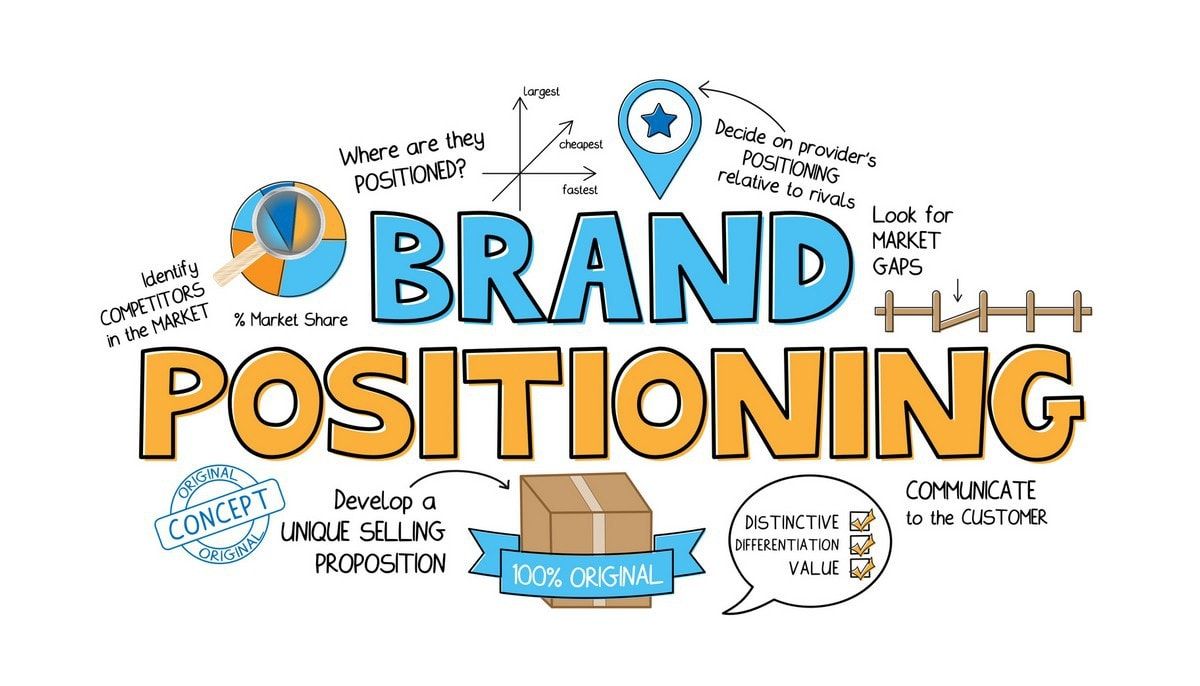
4. Establish your brand’s positioning
You now have enough data to ascertain where your company is positioned in the market (also known as market positioning). Why should possible customers in your target market choose to work with you rather than with other companies? The core of your brand positioning is represented in a statement that is usually between four and six sentences long. As you will have to fulfill your pledges, it must be based in reality. You may use aspirational language that alludes to the company you want to be in the future if some of your rivals share your existing differentiators. Simply ensure that these goals are realistic and attainable.
5. Create a messaging strategy
Your next step is to create a messaging strategy that conveys the positioning of your brand in messages that you can send to your different target groups. Potential clients, potential workers, referral sources or other influencers, and potential partnership prospects are just a few of the typical suspects in your target markets. Every audience will be interested in different aspects of your core brand positioning, though it must be consistent for all audiences. The most pertinent aspects will be highlighted in the communication to each audience. Each audience will also have unique issues that need to be answered, and each will require different forms of evidence to back up your arguments. All of these demands should be met by your communication approach. Making your brand pertinent to your target audiences requires taking this crucial step. Sample headlines, a list of your differentiators, your elevator pitch (modified to each audience, if necessary), and a messaging architecture document that outlines key messages for each audience, common objections, responses to overcome those objections, and any proof points to support your claims may all be part of your messaging plan.
6. Create your brand, logo, and slogan
A name change is not necessary for many businesses. However, a name change may be necessary if you’re a young business, going through a merger, or have a name that no longer reflects your market position. A new logo and slogan could be necessary to support your new brand positioning, even if you don’t alter the name of your company. Keep in mind that your brand is not your name, logo, or tagline. They make up your brand identity, which is the verbal and visual representation of yourbrand. Although your brand is represented by your logo, the thoughts and feelings that people have about your brand come together from a variety of touch points. Remember that any new name, logo, or tagline you create should be for your industry and judged on how effectively it speaks to your target market. It’s quite simple to fall into the trap of seeking remedies that appeal to you or that mirror characteristics of an unrelated company you like.
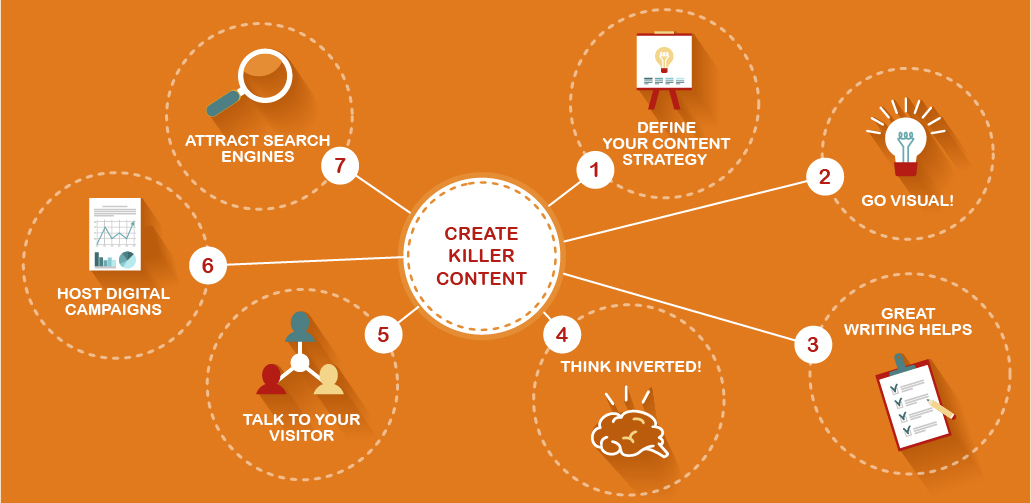
7. Create your content marketing plan.
This step could have been given the name “develop your marketing strategy.” However, we didn’t. We are advocating for a content marketing approach instead. Why? In the digital era, content marketing is especially effective for companies that provide expert services. It performs all of the functions of conventional marketing but does so with greater efficiency. It uses valuable educational material to entice, nurture, and qualify potential clients, in a nutshell. Keep in mind that your brand strength is determined by both your reputation and visibility. Only improving exposure is rarely successful if you don’t also improve your reputation. For this reason, traditional “awareness-building” advertising or sponsorships frequently have underwhelming outcomes. Conversely, content marketing enhances both visibility and reputation simultaneously. Additionally, it’s a great method to ensure your brand is relevant to your target market.
8. Make your website.
Your website is probably your most crucial resource for brand development. It’s the spot where all of your audiences go to find out what you do, how you do it, and who your clients are. Your website alone is unlikely to be the deciding factor for potential clients when selecting your company. However, if your site conveys the incorrect information, they may very well eliminate you. Additionally, your website will host your important information. You will concentrate your search engine optimization (SEO) efforts on that material in order to make sure that prospects, potential employees, and referral sources can locate you and discover more about your business and industry knowledge. A contemporary brand development plan must include internet material as a key component. The two categories of websites offering professional services are as follows. The first is a branding site that introduces you, your target audience, and your line of business by telling your tale. In a nutshell, it communicates your brand message. In addition to doing all of the aforementioned, the second kind also generates leads, fosters engagement, and guides potential clients closer to a sale. We refer to them as High Performance Websites.
9. Develop your marketing arsenal.
Creating the rest of your marketing toolkit is the next stage in the process. This may involve one-page sales materials outlining essential service offerings or target markets served. Furthermore, you may need a pitch deck or brochure that gives a brief synopsis of your company and its main offerings. Although these items are not as widely printed anymore, it could be beneficial to have printed marketing materials available if you go to live conferences and events. Videos are becoming a more and more important component of this marketing arsenal. “Meet the partner” videos, case studies, and business overviews are some of the well-liked video themes. These tools, when used properly, can improve your brand in addition to serving as a business development tool.
10. Implement, monitor, and make changes
One of the most crucial steps in the process of creating a brand could be the last one. If a successful brand development plan is never put into practice, it is of little use. The frequency with which that occurs may astound you. With all the best intentions it can muster, a company creates a strong plan. Then reality intervenes. Brand development activities are put off as individuals focus on client assignments, and then they are forgotten. For this reason, it’s crucial to keep track of things. It is highly recommended that the plan’s implementation as well as its outcomes be monitored. Was the plan carried out as intended? What happened with the quantitative indicators, like website visitors and search traffic? How many new leads, employee applications, and potential partners did it produce? It’s only possible to be certain that you’re drawing the correct conclusions and making the necessary changes by monitoring the whole proces.

Conclusion
Well, that’s it! A 10-step brand development plan to increase the growth and profitability of your business. When reading this piece, consider the strength of your company’s brand and what actions you may take to increase its distinctiveness, exposure, and appeal.